
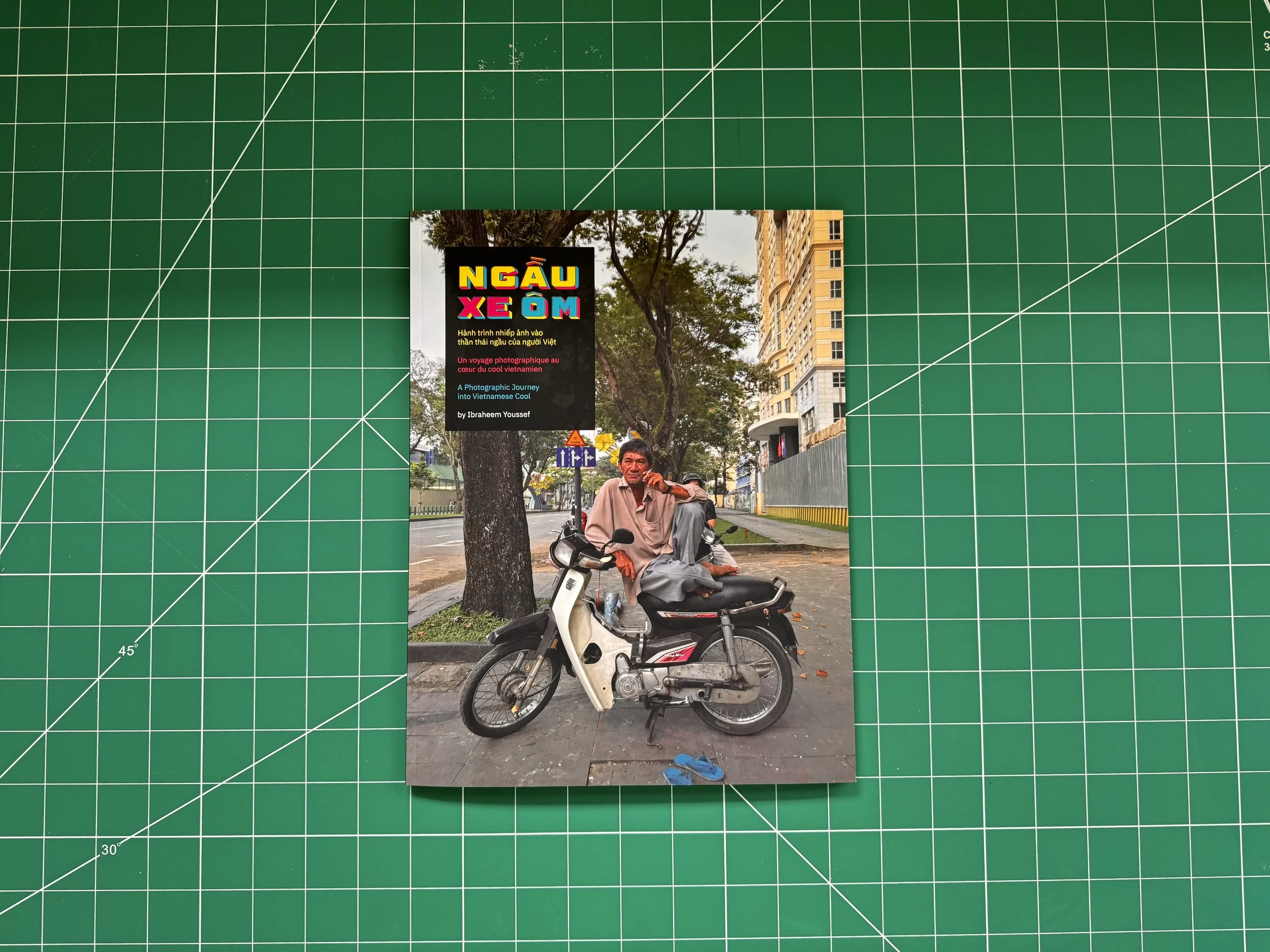
Ngau Xe Ôm
Photography book / 8.5" x 11" / Perfect Bound / 92 pages / 110lb Satin Cover / 80lb Satin Text Paper / 2026
In the chaotic, beautiful tangle of Ho Chi Minh City's streets, one figure has long defined the rhythm of urban Vietnamese life: the xe ôm driver. Xe ôm means motorbike hug — a name earned from the intimacy of passenger and driver pressed together through the city's relentless traffic. For decades, these men were the connective tissue of the Vietnamese street, ferrying strangers through alleyways and boulevards for a few thousand dong.
Ngầu Xe Ôm is a photographic portrait of these men at the precise moment of their disappearance. As Grab and Gojek colonise the Vietnamese market, the informal xe ôm trade is quietly dying. The men who spent their lives waiting for fares on street corners — smoking, dozing, staring into the middle distance — are being replaced by an algorithm.
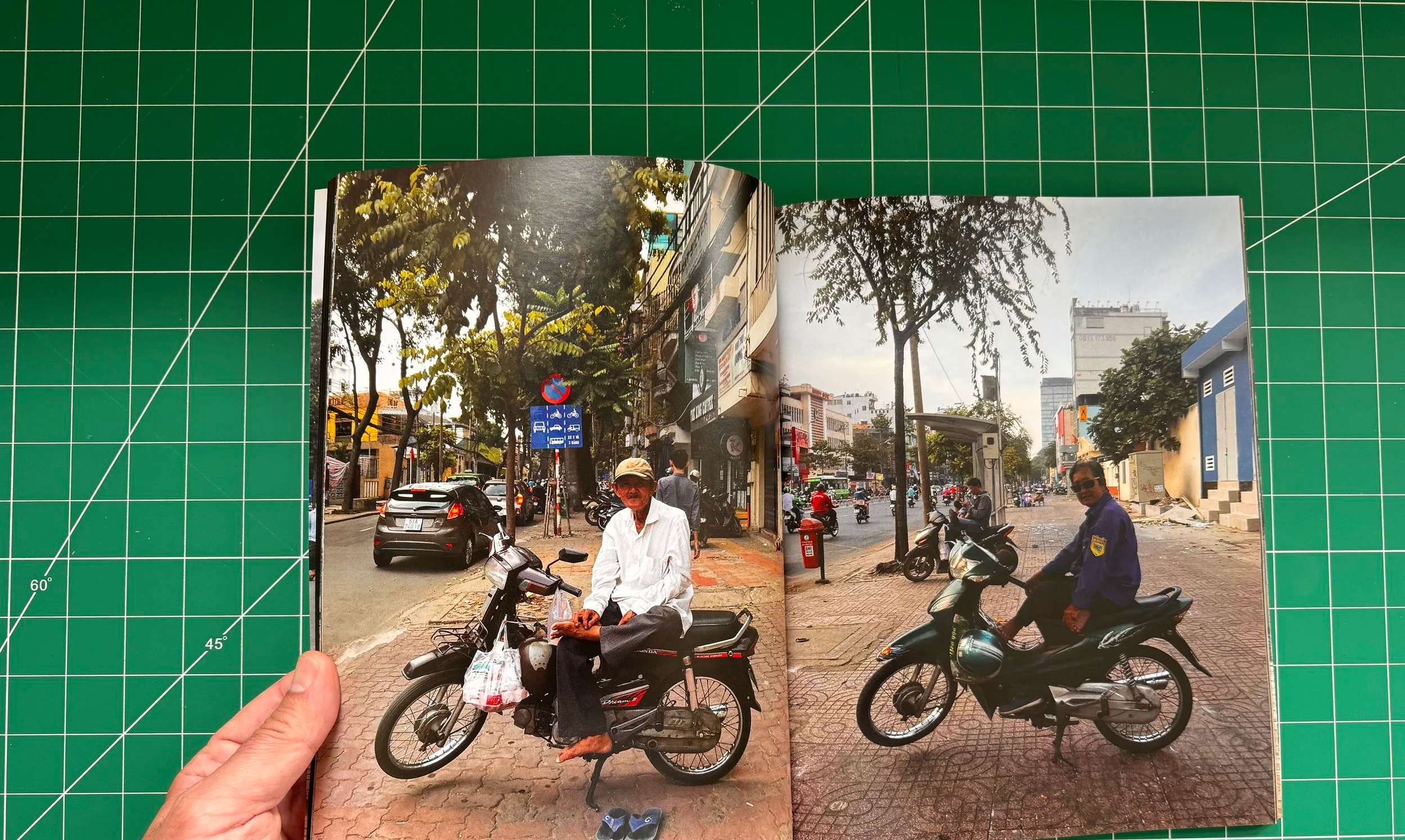
What photographer Ibraheem Youssef found, documenting them over time, was something he did not expect: an extraordinary, effortless cool. In Vietnamese, the word for it is ngầu. It has no precise English translation. It means something tougher and more weathered than cool, more earned than stylish, more defiant than relaxed. These men, sprawled across their bikes with the unhurried authority of men who own the street, have ngầu in abundance.
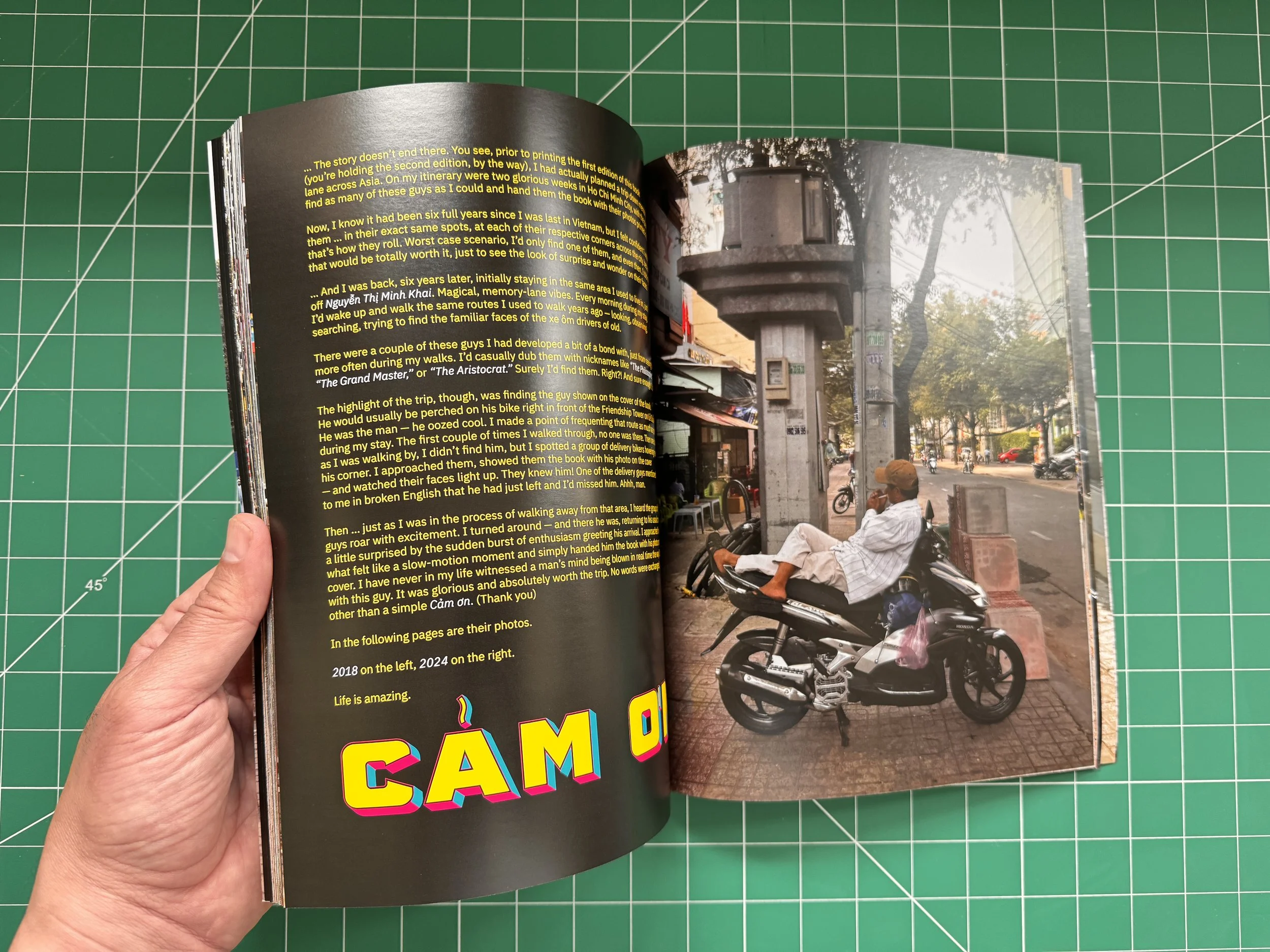
The book makes no argument and offers no elegy. It simply looks. Each photograph is a study in stillness: a man and his machine, occupying space with complete conviction, indifferent to the city rushing past them.
Ngầu Xe Ôm is trilingual, in Vietnamese, French and English, reflecting Vietnam's layered colonial history and its restless contemporary identity. It is a document of working-class dignity, a record of a vanishing culture, and a celebration of the particular kind of human beauty that asks nothing of anyone and impresses everyone anyway.